
Tempered vs Laminated Auto Glass: What the Difference Means for Your Vehicle
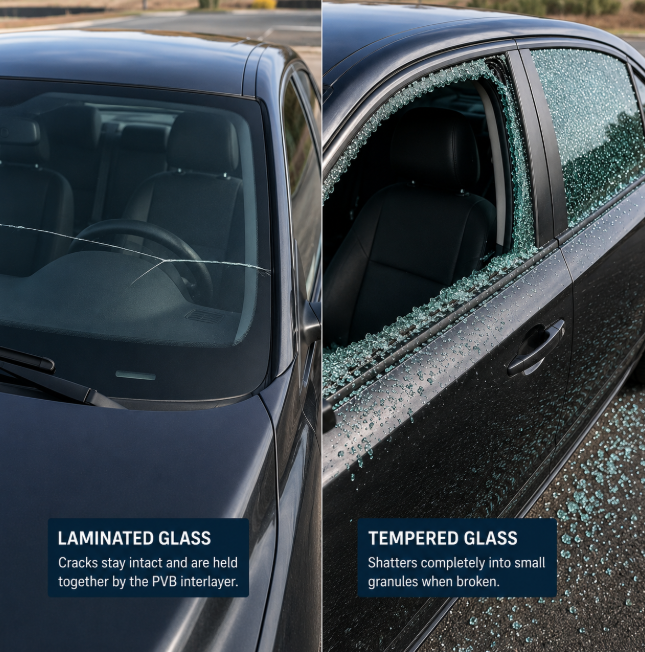
Most drivers picture the glass on their car as one type of material. It is not. Every vehicle on the road today has two completely different types of glass installed, and they behave in opposite ways under impact. That difference matters more than people realize, especially in Colorado, where hail, gravel, and break-ins all put car glass under regular stress.
Here is what each type is, how each one fails, and what that means when something needs to be replaced.
Tempered vs Laminated Auto Glass: What the Difference Means for Your Vehicle
Book Same-Day Replacement →The Two Types of Auto Glass
How Each Type Fails Under Impact
This is where the difference becomes important.A laminated windshield does not shatter. When struck by a rock, a hailstone, or the impact of a collision, the outer layer can chip or crack, but the PVB interlayer holds the entire windshield together. The glass stays in place, the cabin remains protected, and the driver retains visibility. That makes a windshield a structural safety component, not just a window.
A tempered side window or sunroof behaves completely differently. When tempered glass fails, it shatters instantly into thousands of small pebble-sized granules. There is no halfway state. It is either intact or it is gone.
This is also why drivers are often caught off guard when a side window collapses completely after what felt like a minor impact, while a cracked windshield can stay together for days. They look like the same material, but they are engineered to do opposite things.
What That Means for Replacement
Because the two glass types fail so differently, the replacement work is also different.
For a job involving a side window or rear window, the work involves removing the destroyed glass and granules from the seal and interior, fitting the new tempered panel, and reconnecting any electrical systems bonded to the original glass (defroster grids, embedded antennas, rear cameras). Most jobs are done in 30 to 45 minutes, with no cure time before driving. You can read more about our full auto glass replacement in Denver service on the main service page.
Windshield work is more involved. The old glass is cut out from the urethane adhesive bead, the frame is cleaned and prepared, the new windshield is fitted with fresh AGRSS-approved adhesive, and the vehicle requires a specific cure time before it is safe to drive. ADAS recalibration is typically required afterward to align the cameras and sensors integrated into modern windshields.
Why It Matters for Local Drivers
Frequently Asked Questions
Can a chipped tempered window be saved?
Does my insurance treat tempered and laminated damage differently?
Why does my vehicle have laminated side windows on a newer model?
Can hail damage a sunroof from above?
Questions about a specific window?
Call us with your make and model and we will confirm the right replacement on the spot.
Our Services
AGRSS Certified
Industry-standard installation on every job
Lifetime Warranty
Every installation fully warranted
Insurance Handled
We file the claim and bill directly
Free Mobile Service
We come to your home or office
Competition Auto Glass
Denver's trusted auto glass specialists. AGRSS-certified technicians, OEM-quality glass, free mobile service and insurance handled on every job.